Road running
Road lasts with stated drop and EVA midsole geometry. Phylon appears only when compression-molded geometry is written into the pack. Outsoles use a road rubber compound, not a hiking lug.
Each vertical below is a last and outsole map, not a lifestyle headline. Road running, trail, hiking, soccer, water sandals and team wholesale share a construction sequence and then diverge on drop, lug or stud geometry, membrane option and size-run rules.
Scroll the row on desktop. Each card states the governing last and the compound that usually travels with it. Typical values remain screening data until the retain lot is tested.
Road lasts with stated drop and EVA midsole geometry. Phylon appears only when compression-molded geometry is written into the pack. Outsoles use a road rubber compound, not a hiking lug.
Trail lasts add a lugged rubber outsole and often a rock plate. Membrane is optional. Hydrostatic head is listed only when a GORE-TEX membrane or PU coating is actually built.
Hiking lasts carry a shank and higher collar. Waterproof packs name membrane or coating plus hydrostatic head in mm. DWR alone is not written as waterproof.
Cleat lasts follow a stud map for FG, AG or indoor. Mixing stud maps in one SKU is a new construction. Textile GSM for the upper is listed when the pack includes it.
Athletic sandals record footbed density and drainage. They do not inherit hiking membrane claims. Quick-dry linings are described by construction, not as unlimited water use.
Club and school size-runs add delivery windows. Colorways do not change last or stud map. Private-label OEM is a separate track from stock wholesale.
The cases are category descriptions. They show which fields move when a buyer changes channel or activity. They are not endorsements and they do not cite a market share.
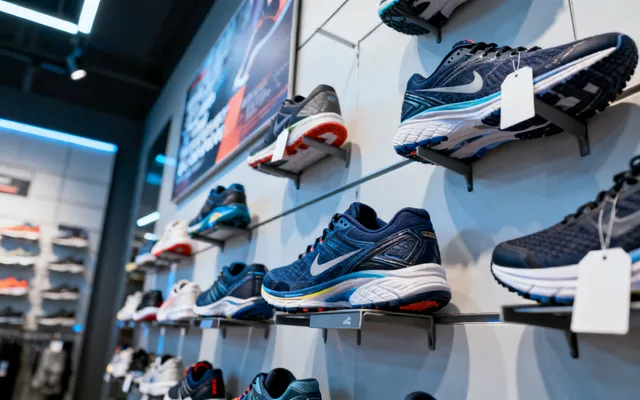
A multi-country retailer asked for two road lasts, three drops and a shared EVA density window so SKUs could share midsole tooling. Colorways stayed on the same last. The dossier listed OEKO-TEX STANDARD 100 for the knit uppers actually used, not for a hiking textile that was out of scope. Stock wholesale clocks applied because the lasts already existed.
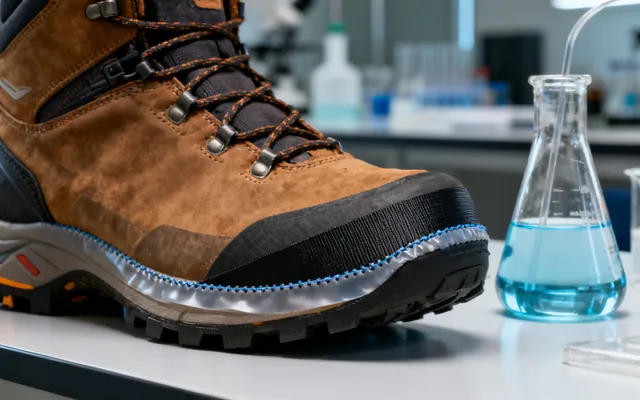
An outdoor distributor compared GORE-TEX membrane boots with a PU-coated alternative on the same last. Hydrostatic head, seam map and dry mass changed enough that the PU version became a second construction. DWR on the coated version was written as a finish. The buyer received two retain lots rather than one relabeled SKU.
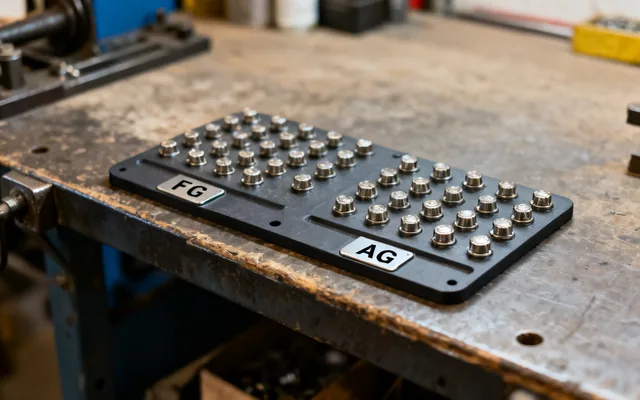
A club program needed FG studs, an adult last and a youth last with CPSIA notes for the US size-run. Private-label marks went on the hangtag only after the last freeze. Mixing AG studs into the FG SKU was rejected. The proposal used the five-business-day OEM clock because logo and carton marks were in scope.
Across these cases the disputed choice is rarely “more cushioning.” It is last volume, EVA versus Phylon, GORE-TEX membrane versus PU coating, and stock wholesale versus private-label OEM. Those four decisions determine tooling, hydrostatic head, dossier scope and lead time. Carbon plates, unlimited waterproofing and injury-proof language stay off the pack.

Send the vertical, last notes, membrane option and channel. The intake desk will not treat a lifestyle photograph as a construction.